


Publication Abstract
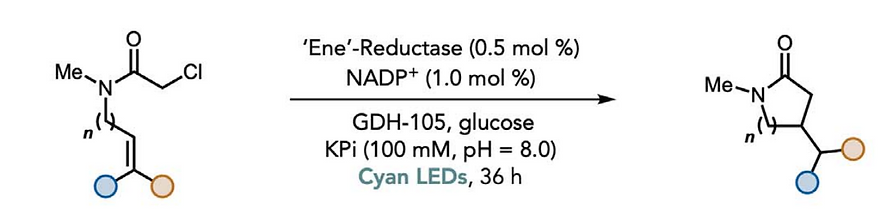
Photoexcitation is a common strategy for initiating radical reactions in chemical synthesis. We found that photoexcitation of flavin-dependent “ene”-reductases changes their catalytic function, enabling these enzymes to promote an asymmetric radical cyclization. This reactivity enables the construction of five-, six-, seven-, and eight-membered lactams with stereochemical preference conferred by the enzyme active site. After formation of a prochiral radical, the enzyme guides the delivery of a hydrogen atom from flavin—a challenging feat for small-molecule chemical reagents. The initial electron transfer occurs through direct excitation of an electron donor-acceptor complex that forms between the substrate and the reduced flavin cofactor within the enzyme active site. Photoexcitation of promiscuous flavoenzymes has thus furnished a previously unknown biocatalytic reaction.